
The quintuplets from The Quintessential Quintuplets never had different hair colors
There are facts about anime that continue to circulate years after the end of a series, and this is one of the fandom's favorites. In The Quintessential Quintuplets (Gotoubun no Hanayome), each sister Nakano she has a different hair color on screen, but canonically, within the story, that never existed.
The quintuplets of The Quintessential Quintuplets Do they have the same hair color?
Yes. According to the canon of the series, the five sisters Nakano They are physically identical to each other, including their hair color. The different shades we see on screen, Ichika's pink, Nino's blue, Miku's green, Yotsuba's purple and Itsuki's orange, were a purely visual production decision, designed so that the audience could easily distinguish each sister with the naked eye.
Within the narrative universe of the story, however, the quintuplets share a completely identical physique, with no difference in hair color to distinguish them from one another.
Why did Futarou have such a hard time recognizing them?
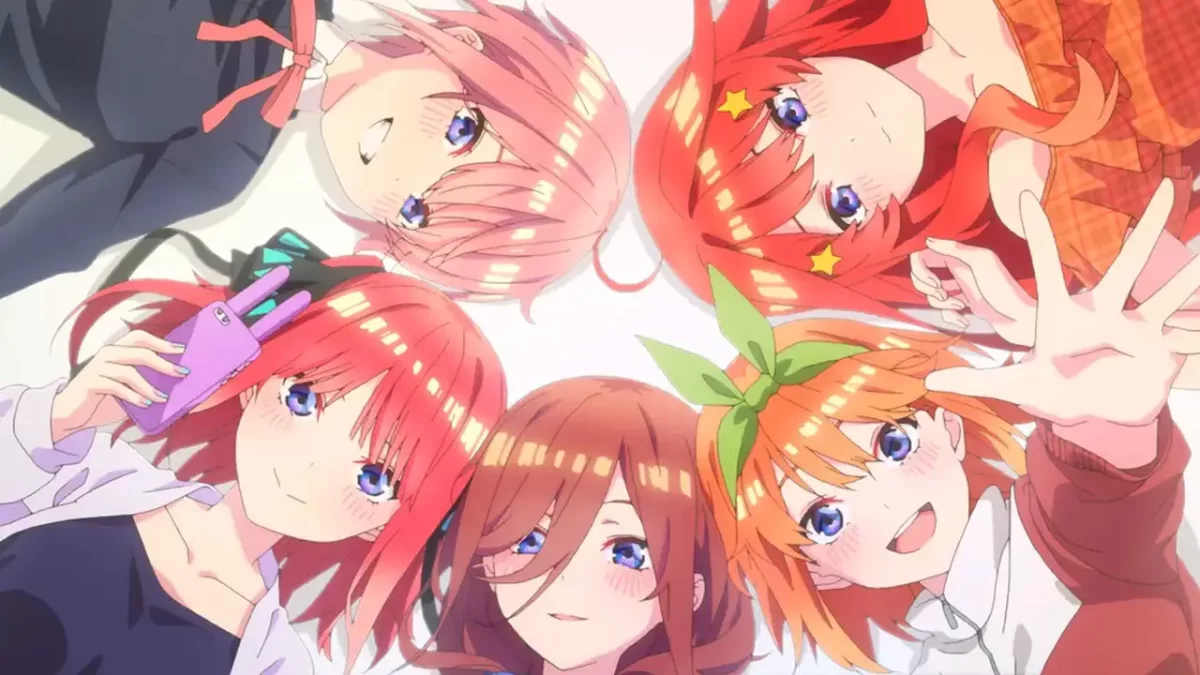
This revelation directly explains one of the most talked about, and sometimes criticized, narrative elements of the series: the protagonist's constant difficulty, Futarou Uesugito distinguish each of the sisters at the beginning of the story.
For a good part of the audience, this confusion seemed exaggerated or forced as a narrative device, especially because from the viewer's perspective the visual differences are evident thanks to the hair colors. But if within the story the five sisters are truly indistinguishable on a physical level, Futarou's difficulty in recognizing them stops being an exaggeration and becomes a logical and coherent consequence of the real canon of the series.
This distinction is key to understanding one of the central tensions of the plot: Futarou's challenge was not simply to memorize colors, but to learn to genuinely know each sister's personality, gestures, and way of speaking in order to differentiate them, something much more aligned with the story's central theme of individual identity versus shared appearance.
Why does this fact continue to generate conversation in the fandom?
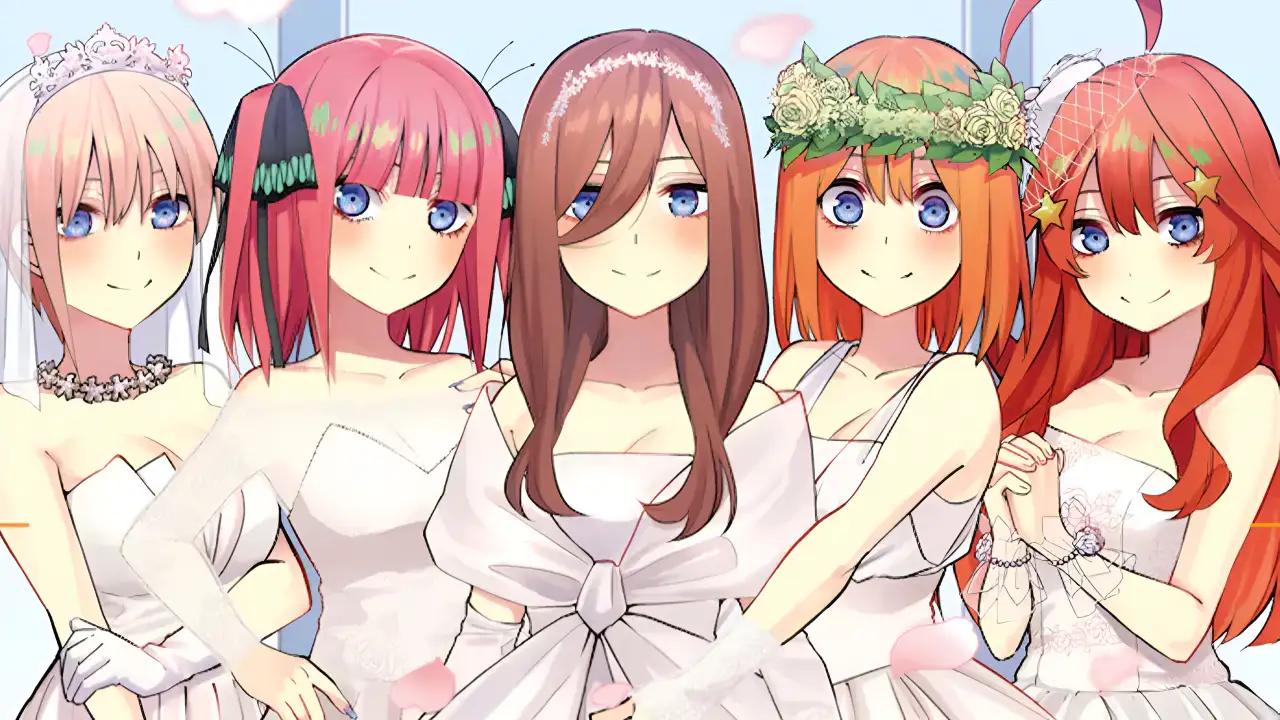
The striking thing about this curiosity is that it is not new information within the franchise. The Quintessential Quintupletsbut it continues to resurface periodically on social media and fan communities, generating the same shocked reaction each time. Part of its comedic effect comes from something very specific: for years, much of the fandom debated and “took sides” for its favorite quintuplet based, in part, on her hair color as a distinctive personality or aesthetic trait, a trait that, technically, never existed within the story's actual canon.
This generated a wave of jokes within the community, where many fans humorously point out that they spent years defending their favorite character based on a visual feature that was, from the beginning, a production tool and not a canonical element of the narrative world.
A more common visual resource than it seems
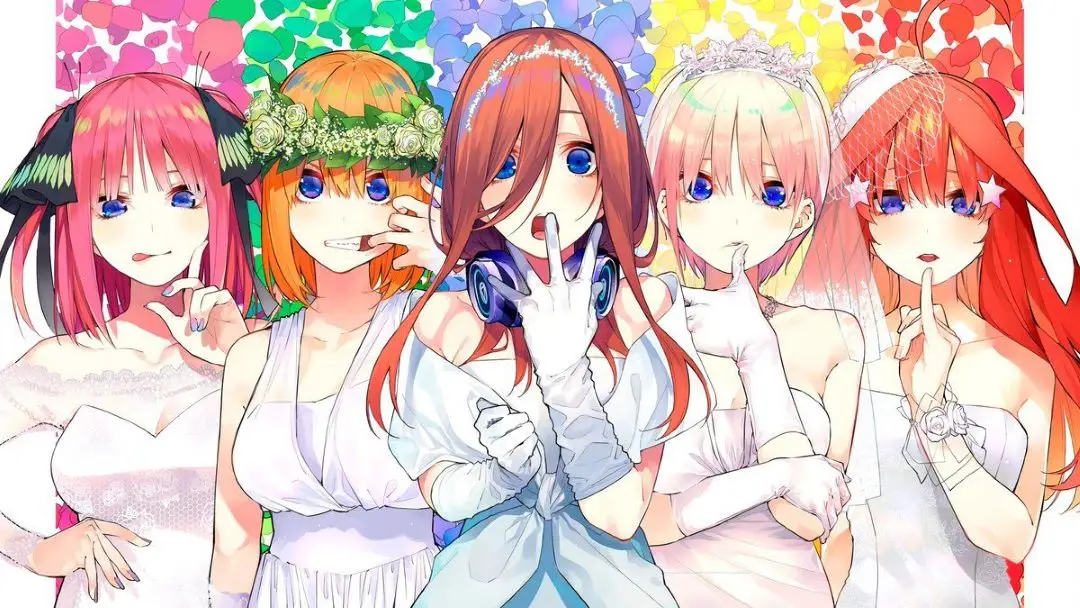
This type of design decision, assigning distinctive colors to characters who in the original story are visually identical or very similar, is a relatively common practice in anime, especially in series that feature groups of characters with a shared base design. The function is purely practical: helping the audience visually process who is who without relying exclusively on narrative context or dialogue.
In the case of Gotoubun no Hanayomethis decision proved to be particularly effective from a commercial and marketing standpoint, as each sister's signature colors became a fundamental part of the franchise's visual identity, present in all of its merchandising, promotional art, and marketing material, even if, within the world of the story, those colors never actually existed.
Post a Comment