
DLSS 5 and the new era of visual realism
The hardware industry has just taken an unexpected turn with the official announcement from NVIDIA. The company has presented the first touches of DLSS 5a technology that promises to arrive this fall and that is already generating an intense debate among graphics performance enthusiasts. Unlike previous resolution-focused versions, this iteration appears to focus on a lighting filter using artificial intelligence.
But why is this really different from what we already know? In the following lines, we analyze in depth whether we are facing a technical revolution or simply an aesthetic refinement for new generation graphics cards.
The leap towards smart lighting
After having analyzed the first technical details, it is clear that DLSS 5 it does not seek to simply stretch the pixels. NVIDIA's big bet on this occasion is light management. Traditionally, ray tracing has consumed massive resources, limiting fluidity in demanding titles. However, the implementation of a AI model dedicated to lighting It could change the rules of the game definitively.
This approach allows the video card to “predict” how light should bounce in a scene without needing to calculate each ray individually. Consequently, developers could offer much more vibrant worlds without sacrificing frame rate. It is an advance that demonstrates the NVIDIA dominance in the field of deep learning applied to digital entertainment.
Strategic implementation of DLSS 5
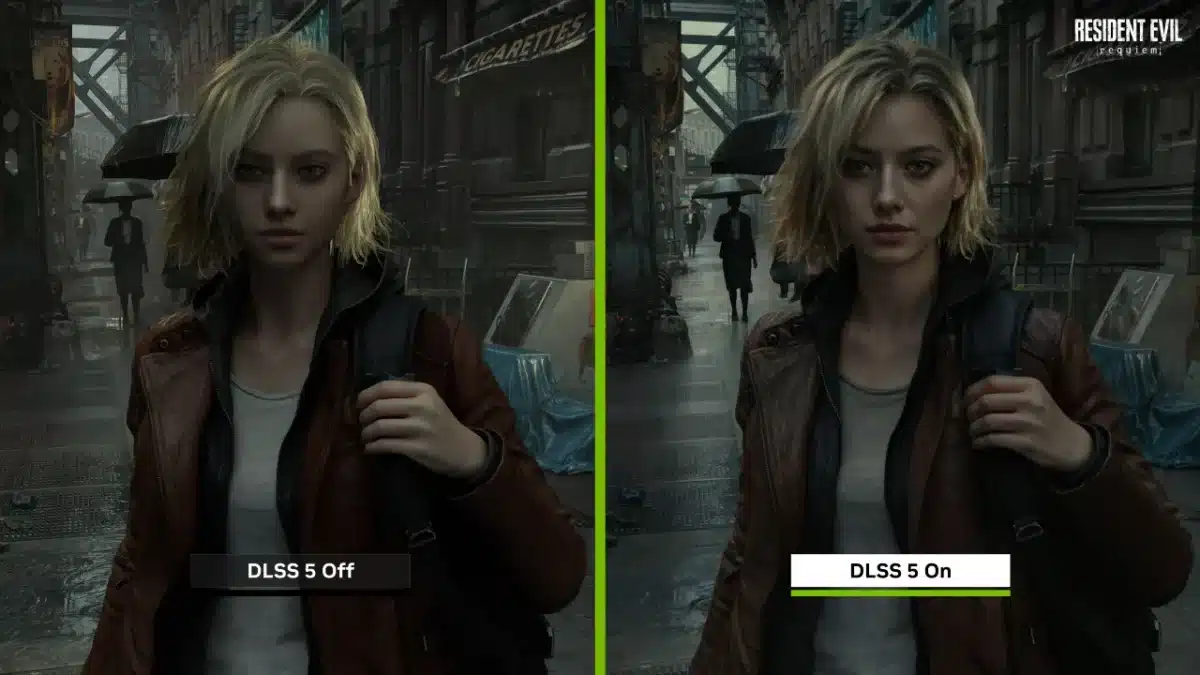
Many users wonder if their current hardware will be enough for this transition. Looking at the brand's history, it is evident that DLSS 5 seeks to optimize the workflow of Tensor cores. This technology is not just a cosmetic addition; represents a modern rendering restructuring. Thanks to this, visual coherence in complex scenes, such as dense forests or rainy cities, will reach a level of fidelity never before seen in real time.
Furthermore, the use of artificial intelligence to correct imperfections Lighting reduces the visual noise that often plagues games with active Ray Tracing. Therefore, the gaming experience becomes much more organic and less “processed” in the eyes of the expert player. The key here is energy and processing efficiency that only a trained algorithm can offer today.

The expert's verdict
In conclusion, the arrival of DLSS 5 This fall marks a milestone in the evolution of PC gaming. It's not just about seeing more frames, but about each of those frames having a higher artistic quality. While performance testing in real and varied environments is yet to be seen, the promise of a AI-assisted global illumination It's enough to keep us optimistic about the future of hardware.
From my perspective, NVIDIA is making software as important as the silicon itself. We are facing a tool that will democratize the photorealism in video games. Now, we would love to know your opinion about this technological advance.
Do you think the focus on lighting is more important than simply increasing resolution? Leave us your opinion in the comments and let's debate the future of gaming.

Post a Comment