
A discovery that unites science and pop culture has captured the world's attention. Paleontologists in Chile revealed the discovery of a new species of extinct sawshark that inhabited the seas of the Miocene, approximately 8 million years. The researchers identified the species from microfossils found in the Bahía Inglesa formation and named it Pochitaserra patriciacanalae. The name so honors the renowned Chilean paleontologist Dr. Patricia Canales like the beloved character Pochita, from the manga Chainsaw Man.
But why is a seemingly geeky appointment actually a pivotal moment for science and fandom? We analyze it.
The Legacy of Pochita: Bridging the Distance between Science and the New Generations
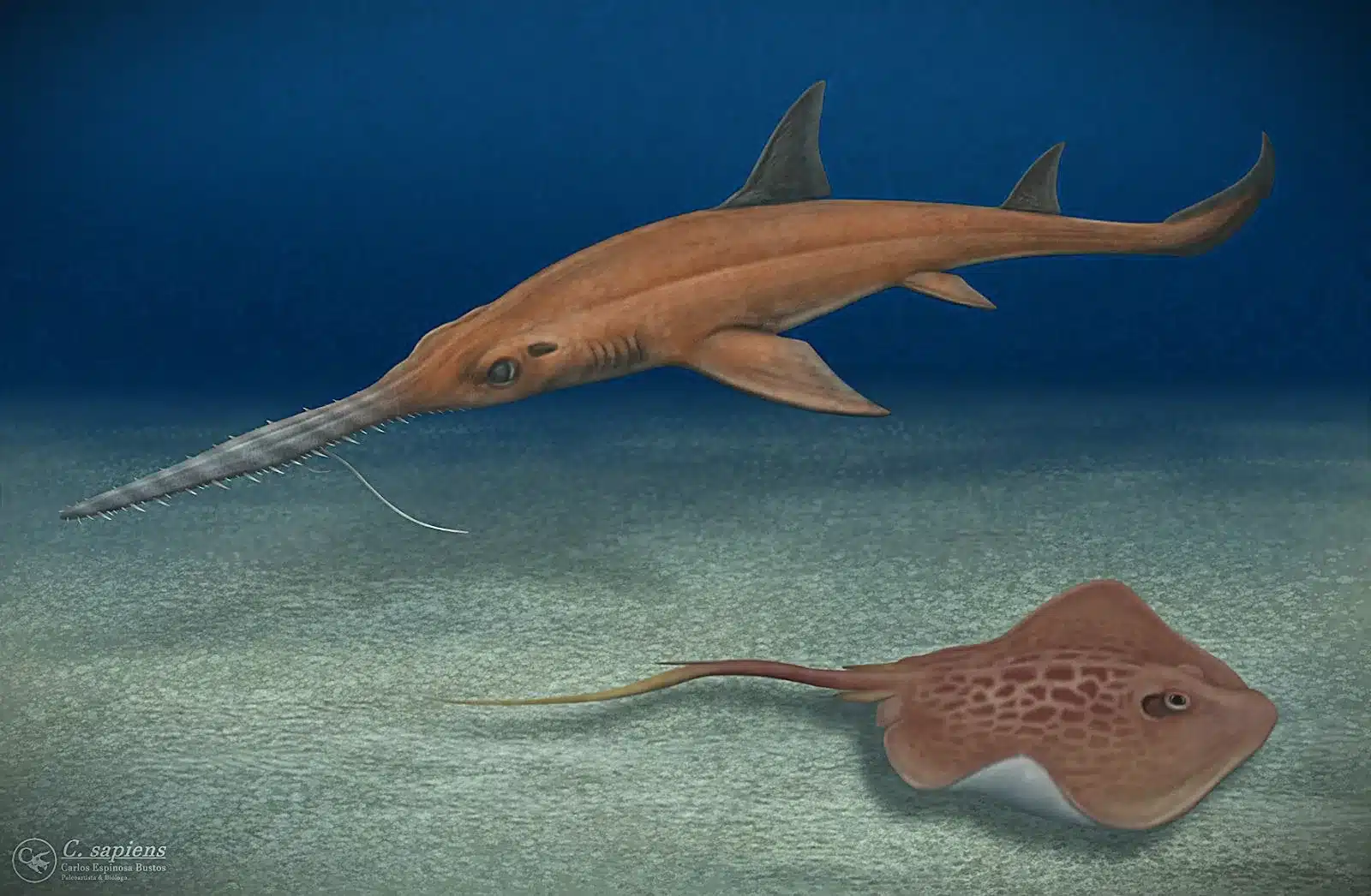
The co-author of the study, Dr. Martín Chávez, explained that the purpose of the name was to create something “memorable”, capable of connecting science with contemporary culture. This is not just a reference to a manga. The decision also shows a smart strategy within the academic world: Bring paleontology to new generations through familiar and exciting symbols.
Name an extinct species after Pochita It is not only a nice gesture, but a way to demonstrate that science can also dialogue with pop culture without losing rigor.
The origin behind the name Pochitaserra

In the paleontology of elasmobranchs, such as sharks and rays, Descriptions are usually based on teeth and vertebrae. This is because their skeletons, made of cartilage, rarely fossilize. Each find is a tiny but essential window into understanding what these ancient predators were like and how they evolved over time.
After studying the shape of the sawshark, its elongated “face” covered in teeth makes the inspiration behind its name clear. The comparison with a chainsaw and with Pochita, It is not exaggerated, since its similarity is literal. The scientific name Pochitaserra (from Pochita + serra, “saw” in Latin) It works as a cultural nod, but also as an exact description of its morphology, achieving a balance between scientific rigor and originality.
A tribute with purpose
In addition to its nod to the manga universe, the discovery also honors renowned Chilean paleontologist Dr. Patricia Canales, a key figure in the study of prehistoric sharks. Giving the species its name not only celebrates its contribution to science, but reinforces the idea that paleontology is a collective work that transcends generations. This double tribute, which combines pop culture and scientific rigor, reflects a new way of communicating science: close, human and with its own identity.

The Verdict
Pochitaserra patriciacanalae represents much more than an extinct species. It is a symbol of the encounter between natural history and contemporary culture, an example of how science can dialogue with art and entertainment without losing its essence. This discovery, which connects millions of years of marine evolution with the imagination of modern manga, demonstrates that knowledge and popular passion can walk together towards the same goal, understanding and celebrating our curiosity about the world.
And you? What other character do you think would deserve to inspire a scientific discovery?
Post a Comment